Cannabis Extracts Guide: Types & Extraction Methods
Executive Summary (TL;DR)
- A practical cannabis extracts guide starts with safety and compliance, then moves to chemistry, equipment, and go-to-market. Extraction choices affect capex, opex, yield, terpene retention, and regulatory obligations (C1D1/C1D2, hazardous locations, wastewater).
- Hydrocarbon (butane/propane), ethanol, CO₂ (supercritical/subcritical), solventless (ice water hash/rosin), and post-processing (winterization, distillation, terpene recovery) each occupy specific quality/price tiers.
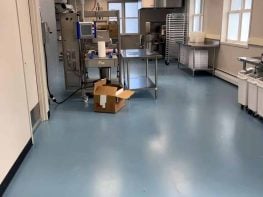
- The right facility is half the battle: industrial shells that support extraction room classifications, ventilation, utilities, and waste handling speed approvals and lower build risk. → See processing/manufacturing businesses that are already operating
- Investors and operators should model total cost of ownership (TCO) across 5–10 years, including utilities, solvent/cylinder logistics, labor, consumables, compliance testing, and downtime—not just equipment sticker price.
- Repeatability wins. SOPs, batch records, and validated cleaning methods protect brand trust more than chasing the “hype strain” of the season.
Table of Contents
- What this cannabis extracts guide covers
- The extraction landscape at a glance
- Facility siting: zoning, buffers, and code classification
- Hydrocarbon extraction (BHO/PHO)
- Ethanol extraction
- CO₂ extraction
- Solventless methods: ice water hash & rosin
- Post-processing: winterization, filtration, decarb, distillation, terpene recovery
- Operations, safety, and compliance testing
- Cost model and underwriting
- Due-diligence checklist
- Decision matrix: choose your method
- Next steps (properties, shells, and operating assets)
What this cannabis extracts guide covers
This guide is written for operators and investors building or acquiring extraction capacity. It covers how the main extraction methods work, what facilities and permits they require, and how to evaluate options through yield, cost, and risk. Your most durable competitive advantage is consistent process control—beginning with the room you choose and the classifications it must meet.
If speed is the priority: inherit proven infrastructure and permits where possible. → Browse manufacturing/processing businesses for sale
The extraction landscape at a glance
| Method | Typical inputs | Quality & profile | Strengths | Watch-outs |
|---|---|---|---|---|
| Hydrocarbon (butane/propane) | Fresh frozen or cured biomass | High terpene retention; shatter, badder, live resin, sauce/diamonds | Potent concentrates; excellent flavor potential | C1D1/C1D2 classified rooms; solvent recovery & residual solvent testing |
| Ethanol | Cured biomass; trim | Broad spectrum; good for crude destined for distillation | High throughput; simpler supply chain | Chlorophyll pickup without tight parameters; flammable liquid handling |
| CO₂ (supercritical/subcritical) | Dried biomass | Tunable selectivity; terpene fractionation | Nonflammable solvent; parameter control | Higher capex; slower throughput vs. ethanol; requires compression |
| Solventless (ice water hash/rosin) | Fresh frozen top-tier material | “Live” flavor, premium boutique SKUs | No solvent licensing; strong craft positioning | Labor heavy; yields depend on cultivar and harvest technique |
Takeaway: Each path can win if it matches your feedstock, brand tier, and facility constraints.
Facility siting: zoning, buffers, and code classification
Even the best machine cannot fix a noncompliant address. Treat zoning and buffers as gate checks:
- Many jurisdictions regulate separation from schools, daycares, youth centers, parks, and other sensitive uses; baseline distances often fall between 600–1,000 ft, with measurement methods defined locally (e.g., property-line to property-line). Always confirm with the Authority Having Jurisdiction (AHJ).
- Extraction suites that use flammable gases or liquids are commonly permitted in industrial districts and may require a Conditional Use Permit (CUP), hazardous materials permits, and special inspections.
- Hydrocarbon rooms must be classified and built per hazardous (classified) locations requirements (C1D1/C1D2) for electrical and equipment.
- Some states/localities publish explicit location-restriction rules with buffer measurement methods; align your site search accordingly.
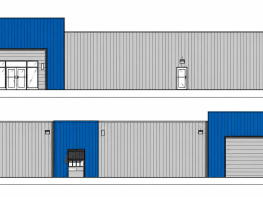
If you prefer to start with a shell that already fits industrial extraction needs (clear heights, power, ventilation pathways), short-list industrial warehouse inventory:
→ Industrial/warehouse space for lease
→ Industrial/warehouse buildings for sale
Hydrocarbon extraction (BHO/PHO)
Solvents: n-butane and propane (or blends). These are liquefied petroleum gases (LPGs) with low boiling points, enabling efficient cannabinoid/terpene extraction at modest temperatures.
Process outline: Closed-loop system → solvent washes biomass → primary separation → collection/recovery → solvent reclamation → purge/finishing (vacuum ovens) → packaging.
Why choose it
- High terpene preservation → strong live resin/sauce SKUs.
- Excellent selectivity; wide menu (shatter, badder, crumble, diamonds).
Engineering & compliance
- Room classification per C1D1/C1D2 for electrical and equipment.
- Ventilation, gas detection, emergency shutoffs, Class I electrical gear, and blast-resistant construction details are standard design topics.
- LPG storage and piping are governed under LP-Gas safety codes; cylinder logistics and hot-work controls must be formalized.
- Mandatory residual solvent compliance testing applies to finished products; SOPs for vacuum purging and QC are essential.
Fit profile: Premium concentrate brand; strong QA discipline; industrial site with classified room capability.
Ethanol extraction
Solvent: Ethanol (frequently denatured for industrial use). Ethanol is a flammable liquid that demands compliant storage, dispensing, and fire protection.
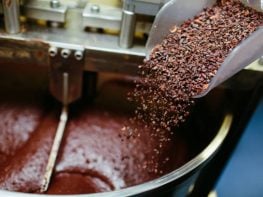
Process outline: Cold ethanol wash or continuous counter-flow → solid-liquid separation → solvent recovery (falling film or rotary) → crude oil → winterization/dewaxing → filtration → decarboxylation → distillation (short-path or wiped film) for distillate.
Why choose it
- High throughput for crude → distillate lines (vapes, edibles).
- Supply chain is straightforward; utilities scale linearly.
Engineering & compliance
- Flammable liquid classification governs tank size, room construction, ventilation, bonding/grounding, and control areas.
- Static control and spill/containment plans required; consider explosion-proofing where classified.
- Waste management: still bottoms, solvent residues, and cleaning solutions must be handled per local haz-waste and wastewater rules.
Fit profile: Volume-oriented SKU mix (distillate vapes, edibles), strong utilities, emphasis on operational efficiency.
CO₂ extraction
Solvent: Carbon dioxide (CO₂), operated supercritical (above critical temp/pressure) or subcritical for more selective terpene capture.
Process outline: CO₂ compressed → extractor → fractionation/phase tuning → separator(s) → solvent recovery/recycle → optional ethanol winterization → distillation/finishing.
Why choose it
- Nonflammable solvent; parameter tunability to target fractions.
- Marketing benefit for certain audiences (“no hydrocarbon solvent used”).
Engineering & compliance
- High-pressure equipment, relief devices, and cylinder/storage rules apply.
- Operators need training on pressure envelopes and maintenance.
- Rooms must manage cold starts, exhaust, and gas monitoring (asphyxiation hazard).
Fit profile: Controlled R&D-driven portfolio, terpene fractionation, or regulatory environments favoring nonflammable solvents.
Solventless methods: ice water hash & rosin
Process outline: Ice water agitation separates trichome heads → sieving/collection by micron → cold room drying (freeze dryers common) → rosin press (heat + pressure) to squeeze oil from hash.
Why choose it
- No solvent licensing; strong “craft” signal and premium positioning.
- Exceptional flavor when feedstock is premium fresh frozen.
Engineering & compliance
- Cold rooms, sanitary construction, water handling, and odor control still matter.
- Throughput is cultivar- and labor-dependent; yields can be variable.
- Define microbial controls (drying validation, sanitary design) and shelf-life testing.
Fit profile: Boutique brand or limited-release program where quality trumps scale.
Post-processing: winterization, filtration, decarb, distillation, terpene recovery
Regardless of the primary method, winning programs share disciplined finishing:
- Winterization & filtration: Reduce waxes/lipids for clarity and cart stability.
- Decarboxylation: Convert acidic cannabinoids to neutral forms before distillation or edible manufacture; manage off-gassing safely.
- Distillation: Short-path and wiped film units refine potency; track residence time and temps to protect terpenes.
- Terpene recovery: Gentle strip and reintroduction strategies can raise product value when executed with QA oversight.
- Residual solvent/impurity testing and specification release are non-negotiable.
Operations, safety, and compliance testing
- Hazardous (classified) locations: Follow C1D1/C1D2 rules for electrical and equipment where flammable gases/vapors may be present.
- Flammable liquids: Apply the correct class (by flash/boil points) for storage and process controls.
- LP-Gas (butane/propane): Store/use per LP-Gas codes; document cylinder changeout, leak checks, and detector calibration.
- Wastewater/NPDES/Pretreatment: Coordinate with your control authority before discharging solvent-bearing or cleaning waste to a POTW; some discharges require permits and pretreatment.
- Residual solvents: Build a release specification aligned to pharmacopeial guidance and state cannabis testing rules.
- Room commissioning: Gas detection, interlocks, emergency ventilation, and fail-safe shutdowns should be validated and logged.
- SOPs: Sampling, retains, deviations, cleaning validation, and mock recalls protect the brand and speed audits.
Cost model and underwriting
Capex: Extraction skids, pumps/compressors, classified room build (hydrocarbon), ethanol storage and recovery, CO₂ systems, winterization, filtration, distillation, vacuum ovens, gas detection/controls, utilities, and commissioning.
Opex: Solvents/cylinders, energy, chillers/heaters, filter media, desiccants, replacement seals/membranes, calibration gases, QA/testing, hazardous waste, PPE, and facility maintenance.
Labor: Cycle time per batch, changeovers, cleaning, and downtime. For solventless, labor is a dominant cost driver; for ethanol/CO₂, utilities and solvent logistics dominate.
Throughput & yield: Model per-day and per-shift output at realistic uptime. Tie gross margin to a range of yields and cannabinoid content in feedstock.
Compliance contingency: Budget for testing, annual detector replacements, and third-party inspections.
Due-diligence checklist
Siting & permits
- Verify industrial zoning, buffers to sensitive uses, and whether a CUP is required.
- Confirm hazardous location classification requirements with the AHJ before architectural plans.
- Align discharge plans with the local control authority (pretreatment) and secure backflow approvals if required.
Process & equipment
- Match method to feedstock and SKU plan (live resin vs. distillate vs. solventless).
- Demand certified electrical gear appropriate to C1D1/C1D2 where applicable.
- Validate material compatibility (seals, gaskets) with chosen solvents.
- Require vendor FAT/SAT (factory/site acceptance testing) and operator training.
Safety & QA
- Gas detection calibration schedule; emergency ventilation interlocks tested.
- Residual solvent limits and release specs; retain samples and COA archives.
- SOPs for cleaning, solvent storage/transfer, hot-work permits, and incident reporting.
Commercial
- Utility bills and power factor correction where needed.
- Redundancy for solvent recovery and chiller/heater loops.
- Insurance endorsements for extraction operations and business interruption.
Decision matrix: choose your method
| If you prioritize… | Consider… | Why |
|---|---|---|
| Premium flavor and concentrate variety | Hydrocarbon | High terpene retention; live resin/sauce/diamonds portfolio |
| High throughput for distillate products | Ethanol | Efficient crude production; straightforward finishing |
| Tunable fractionation and “no hydrocarbon solvent” perception | CO₂ | Parameter control; nonflammable solvent |
| Solvent-free brand story and boutique SKUs | Solventless | No solvent permits; artisanal quality at smaller scale |
Next steps (properties, shells, and operating assets)
- Evaluate shells that already support extraction utilities, ventilation pathways, and hazardous location build-outs. → Warehouse/industrial for lease
- Acquire operating capacity when time-to-market matters. → Manufacturing/processing businesses for sale
- Own the real estate for long-term control of specialty rooms and utilities. → Warehouse/industrial for sale
Disclaimer
This article is for educational purposes only and does not constitute legal, engineering, financial, or tax advice. Always consult qualified professionals and your local Authority Having Jurisdiction before making decisions.