Will the Delta 8 Crackdown Benefit Licensed Cannabis Businesses?
Executive Summary (TL;DR)
- A sustained delta-8 THC (“D8”) crackdown—driven by federal guidance and accelerating state rules—will likely redirect some demand to licensed cannabis channels, but outcomes vary by state and local ordinance.
- Operators with compliant locations, robust retail footprints, and established brand trust are positioned to gain; hemp-only retailers without licenses face costly pivots or consolidation.
- Real estate readiness (zoning, buffers, power, parking, odor/security plans) and local Authority Having Jurisdiction (AHJ) caps will determine how quickly licensed operators can capture displaced demand.
- Investors should expect near-term volatility and mid-term M&A opportunities as gray-market brands seek regulatory shelter via partnerships, roll-ups, or asset sales.
- If you’re evaluating a move, begin with site diligence and licensing feasibility, then align capital and timelines. To source compliant properties and licensed businesses, start with current cannabis listings.
Table of Contents
- Context: What “Delta-8 crackdown” means
- Will the crackdown help licensed operators—net, net?
- Demand shift scenarios & revenue implications
- Real estate & zoning impacts you must underwrite
- Licensing pathways: Converting hemp retailers
- Operators’ checklist & risk controls
- Investors & M&A outlook
- Myth vs. Fact
- Decision matrix: Pivot, partner, or exit
- Action plan & next steps
Context: What “Delta-8 crackdown” means
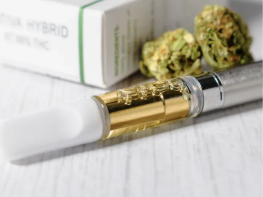
Delta-8 THC (D8) is a psychoactive cannabinoid often manufactured from hemp-derived cannabidiol (CBD). Since 2019–2021, D8 products have proliferated through convenience stores, vape shops, and online storefronts—largely outside state cannabis licensing systems. The crackdown now materializing involves:
- Federal signaling: Agencies have reinforced that synthetically derived tetrahydrocannabinols remain controlled substances, even as courts have recognized that certain hemp-derived products can be lawful under the 2018 Farm Bill when delta-9 THC stays ≤0.3% by dry weight.
- State action: A growing number of states have enacted bans or strict rules for intoxicating hemp cannabinoids (e.g., potency caps, age-gating, labeling, testing, distribution restrictions).
- Consumer protection enforcement: Warning letters and joint actions against misbranded or youth-appealing products, particularly edibles and vapes.
Why this matters for licensed cannabis businesses: If intoxicating hemp products exit unregulated retail shelves, some portion of demand—especially from consumers seeking predictable potency, tested products, and legal protection—can shift into licensed dispensaries and delivery channels. The scale and speed of that shift depends on local licensing capacity, zoning, and retail accessibility.
Will the Delta-8 Crackdown Benefit Licensed Cannabis Businesses?
Short answer: In many markets, yes—but the lift is uneven.
Where AHJs have adequate license counts, storefront coverage, and patient/adult-use access, licensed operators are positioned to capture displaced D8 demand. Expect benefits to be strongest for:
- Retailers with convenient locations, strong SKU breadth (gummies, beverages, vapes), and tight inventory compliance.
- Vertically integrated brands that can quickly substitute SKUs and price points favored by D8 consumers (e.g., low-dose edibles, sessionable beverages).
- Delivery operators in exurban or rural areas previously reliant on hemp shops.
Conversely, gains will be muted where:
- Retail caps throttle storefront growth.
- Zoning leaves large neighborhoods underserved.
- Pricing or taxation keeps licensed products significantly more expensive than legacy or illicit alternatives.
Bottom line: The Delta-8 crackdown can be a net positive for licensed operators if your market has room to absorb demand and your real estate is compliant and well-positioned.
Demand Shift Scenarios & Revenue Implications
| Scenario | Compliance Environment | Likely Demand Shift | Retail Impact | Brand Impact |
|---|---|---|---|---|
| Light enforcement | Limited state actions; sporadic crackdowns | Low | Minor lift at licensed stores near hemp-shop clusters | Slight premium for tested, labeled SKUs |
| Moderate crackdown | Clear potency caps, age-gating, labeling/testing; convenience channel curtailed | Moderate | Notable traffic gains in licensed stores; higher sell-through of gummies/beverages | Consolidation: stronger brands sign white-label/placement deals |
| Strict prohibition | Broad bans on intoxicating hemp cannabinoids; active enforcement | High (but partly to illicit) | Licensed stores gain materially where retail access is convenient; illicit channel also captures some demand | Roll-ups: distressed gray-market brands seek acquisition/licensing deals |
Actionable takeaway: Prepare merchandising and staffing for an uptick in edibles, beverages, and entry-potency SKUs, which mirror typical D8 buyer profiles.
Real Estate & Zoning Impacts You Must Underwrite
A crackdown changes where consumers shop. Licensed retailers succeed when sites are compliant, accessible, and cost-efficient.
Critical diligence points:
- Zoning designation: Confirm allowed use (e.g., retail cannabis, manufacturing, distribution) in the applicable zone(s).
- Buffers from sensitive uses: Schools, daycares, youth centers, libraries, and parks are common triggers. Buffer distances, measurement methods (property line vs. entrance), and rounding rules vary by AHJ.
- Retail density & caps: Check local license caps, lottery/queue status, and whether relocation or transfer is permitted.
- Parking & traffic circulation: Many AHJs require minimum stalls, ADA compliance, and safe ingress/egress; queue management for peak drops.
- Power & mechanicals: Sizing for point-of-sale, security, and back-of-house refrigeration; for production (if applicable), confirm 3-phase power, HVAC, and odor mitigation.
- Security plan: Cameras, storage vaults/safes, alarm monitoring, lighting, and sight-line controls; align with state track-and-trace (e.g., METRC or BioTrack) and chain-of-custody SOPs.
- Signage & storefront: Exterior sign rules, frosted glass/privacy, window coverage limits, hours of operation.
- Lease readiness: Cannabis addenda, right to assign, purchase option, NNN passthroughs on security upgrades, contingency periods keyed to license milestones.
When you’re ready to screen sites against local rules and retail visibility, you can evaluate lease-ready, compliant properties on 420 Property.
Licensing Pathways: Converting Hemp Retailers
Hemp-only retailers seeking to stay in the game may consider transitioning into licensed cannabis (medical or adult-use, where allowed). Expect:
- Entity & disclosures: Ownership vetting, financial disclosures, and background checks.
- Premises diagram & SOPs: Security, inventory, waste, delivery (if permitted), recordkeeping.
- Local first, then state (in many jurisdictions): Conditional use permits (CUP) or equivalent, public notices/hearings, and landlord attestations.
- Product compliance: State-mandated testing, labeling (universal symbols, warnings), child-resistant packaging, potency disclosures.
- Taxation & accounting: Excise tax handling, POS integration, seed-to-sale reconciliation, monthly/quarterly reporting.
- Timeline reality: Build in contingency for AHJ meetings, inspection windows, and punch-list fixes.
If you’re comparing lease vs. purchase for a conversion, model both debt service and time-to-revenue under your jurisdiction’s approval cadence, and account for tenant improvements (TI) required by code.
Operators’ Checklist & Risk Controls
- SKU strategy: Introduce entry-potency, value-priced edibles and beverages to capture former D8 buyers; keep higher-potency options for core users where legal.
- Compliance hygiene: Tight intake testing, COA management, age-gating, and shelf audits; train staff on claim-substantiation and adverse event escalation.
- Pricing architecture: Use good-better-best tiers; leverage bundles and loyalty to reduce sticker shock relative to hemp-store pricing.
- Community relations: Proactively address youth-appeal concerns; lean into responsible marketing and storefront standards the AHJ values.
- Data loops: Monitor SKU turns and basket composition; flag displacement effects (e.g., gummies up, vapes neutral).
- Contingency planning: If your state is still gray on intoxicating hemp, prepare both Moderate and Strict playbooks.
Investors & M&A Outlook
Expect consolidation among hemp-only brands, especially those with strong flavor IP, formulations, and channel relationships but no path to stay on C-store shelves. Likely moves:
- Brand licensing: Gray-market brands partner with licensed manufacturers to enter regulated channels.
- Acqui-hires: Pick up technical teams (extraction, formulation, QA) with proven throughput.
- Distressed asset deals: Inventory, trademarks, domain names, and e-commerce assets transact at discounts.
- Retail roll-ups: Clusters of licensed dispensaries with solid compliance and labor models become regional targets.
Diligence focal points: COA integrity, recall history, packaging/labeling compliance, social-proof vs. legal risk, and margin sustainability after taxes and testing.
When you’re ready to identify acquisition targets or compliant storefronts, explore licensed businesses and properties.
Myth vs. Fact
- Myth: “Hemp-derived means federally legal everywhere.”
Fact: Federal law defines hemp at the plant/derivative level, but states can—and do—ban or strictly regulate intoxicating hemp products. AHJ enforcement determines ground truth. - Myth: “A delta-8 crackdown guarantees higher dispensary sales.”
Fact: Gains materialize only where licensed access (retail density, hours, delivery) meets consumer convenience and price expectations. - Myth: “If a court said D8 can be lawful, I’m safe to sell it anywhere.”
Fact: Court holdings are jurisdiction-specific and do not override state-level prohibitions or federal controls on synthetic cannabinoids. - Myth: “We can convert any hemp shop to a dispensary quickly.”
Fact: Zoning, buffers, caps, hearings, and TI often extend timelines; many locations will not qualify.
Decision Matrix: Pivot, Partner, or Exit
| Your Starting Point | Market Conditions | Recommended Path | Why |
|---|---|---|---|
| Hemp-only retailer with strong foot traffic | AHJ retail caps; limited compliant parcels | Partner with a licensed operator (sub-brand, shop-in-shop, or white-label) | Speed to compliance via someone else’s license and supply chain |
| Hemp brand with loyal online base | Moderate crackdown; robust licensed manufacturing | License your brand to a state-licensed manufacturer | Preserve equity in brand; avoid full licensing burden |
| Single licensed dispensary in an underserved area | Strict crackdown; neighboring hemp shops shutter | Pivot SKUs toward entry-potency and beverages; expand hours/delivery | Capture displaced demand; improve convenience |
| MSO or regional chain | Mixed enforcement; rising AHJ scrutiny | Acquire distressed hemp brands selectively | Accretive IP and flavors; controlled onboarding into compliant SKUs |
| Hemp kiosk / low-margin shop | Tough zoning; heavy OPEX to comply | Exit or merge into retail network | Avoid sunk costs where feasibility is low |
Action Plan & Next Steps
- Map your jurisdiction: Document local retail caps, zoning overlays, buffers, and CUP timelines.
- Pressure-test sites: Validate power, parking, security, and signage requirements before LOI.
- Design the product ladder: Add low-dose edibles and beverages; ensure rigorous COA controls.
- Stage capital: Reserve budget for TI, security, and working capital during licensing delays.
- Prepare two operating plans: Moderate vs. strict crackdown assumptions.
- Move on real estate: If your plan includes expansion or conversion, start site diligence now and browse compliant opportunities.
Disclaimer
This article is for educational purposes only and does not constitute legal, engineering, financial, or tax advice. Always consult qualified professionals and your local Authority Having Jurisdiction before making decision